where do we go from here?
We are born to wander through a chaos field. And yet we do not become hopelessly lost, because each walker who comes before us leaves behind a trace for us to follow.
ROBERT MOOR
This chapter comes last, but I rank it first in significance.
Even after reading this book, you may be asking yourself if now is the best time to start a company. There is a lot broken with the world, and the future is uncertain. If you think starting a business looks risky, you're right: It is and always will be. But I believe it's one of the best ways to make change.
Never mind if your business isn't 'changing the world' from day one, or doesn't employ hundreds of people. As long as you're making the world better in an honest, scalable way by selling a product worth paying for to a community that wants it, starting a company is worth it.
I don't think healing the world only happens if we are able to make 'a dent in the universe,' as Steve Jobs is famously misquoted; it also comes about by repeatedly making small choices that compound and that improve our communities. You can't change everything, but you can and should change a few things, to start.
The reward, once you're profitable and growing sustainably because your customers are spreading the word, is that you get to decide what your company's next positive impact will be. I know that once Gumroad got to that point, it was easier for me to focus on a more meaningful life. But it still wasn't easy. I had to wrestle with a new definition of success, one that would be defined by a greater sense of purpose and mission.
'A healthy man wants a thousand things, a sick man only wants one,' Confucius is purported to have said. Rephrased in the context of this book, a minimalist entrepreneur without a successful, sustainable business only wants one thing (that!), while one who has achieved it has the world as their oyster. And Søren Kierkegaard wrote in 1844 that anxiety is the 'dizziness of freedom.' It's what happens when you stare at the infinity of your own choices.
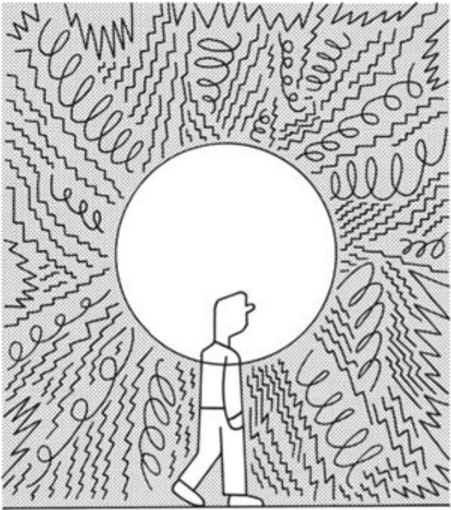
This is all part of what you get-for taking the risk, doing the hard work, and putting in the time to start and to scale your business-whether you like it or not. Now that you've arrived at your initial destination, where do you go next? That's what we'll spend this last chapter trying to answer.
You've Made Money, Now Make Time
The first thing I did when Gumroad became profitable was to reclaim a significant part of my time.
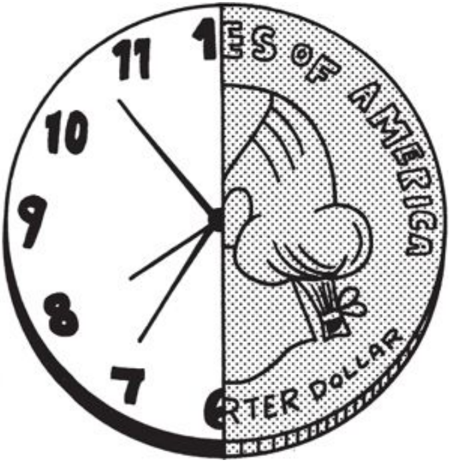
I had lived the founder life for four years, working whenever I wasn't sleeping, neglecting relationships with friends and family, and generally putting work ahead of all else. With all that behind me, I was free to chart a different course. I found that when I wasn't trying to placate investors or make the company grow faster than it was meant to grow, finally, I had time. While I was no longer on track to become a dollar billionaire, I realized I was a 'time billionaire,' someone Graham Duncan defines as having at least a billion seconds left in their life- or at least thirty-one years.
I didn't have a billion bucks, but I did have the luxury (or agony, depending on how you see it) of obligation-free days for the first time in a long time. I rented a modest apartment in Provo, gave up coffee and beer, and started meeting people who shared my creative interests. After years during which work was the crux of my identity, I wanted the rest of my life to be about anything else.
First off: using my time to create more time. I accomplished that by further automating, outsourcing, or outright ignoring everything related to Gumroad I didn't enjoy doing (see chapters 3 and 6). That way, I had as much time to do whatever I wanted, whenever I wanted to do it. Is this possible for everyone and every business? I'm not certain. But I do think that you'd be surprised at all the stuff you don't need to do if you extricate yourself from situations and obligations your former self would have considered essential.
Then I went back to the beginning of my journey: I started creating again. First, I wrote fantasy in Provo as part of a creative writing workshop taught by Brandon Sanderson, one of my favorite authors. Afterward, I stuck around Utah and learned to paint. It probably isn't a surprise, given that I run a company that employs and serves creators, but I like creating stuff.
Creating ex nihilo is satisfying and fun, especially when it doesn't need to pay the bills, and running a minimalist business allowed me to progress at a rapid pace. At some points, I spent upwards of twenty hours a week writing and painting. (And I haven't stopped!)
But for me, making stuff doesn't complete me, just like chasing unicorns didn't. I still cared about having a large impact on the world, and I still had a business to help me do it. I didn't need Gumroad to be a billion-dollar company to be free to pursue my goals with maximal optionality and minimal baggage. And I promise that you don't need your business to be that big, either, to accomplish all you hope to accomplish.
I believe our goal should be to bring together our passions, our missions, our professions, and our vocations. This is the Japanese concept of ikigai , which aligns what you love, with what the world needs, with what you can be paid for, and with what you are good at:
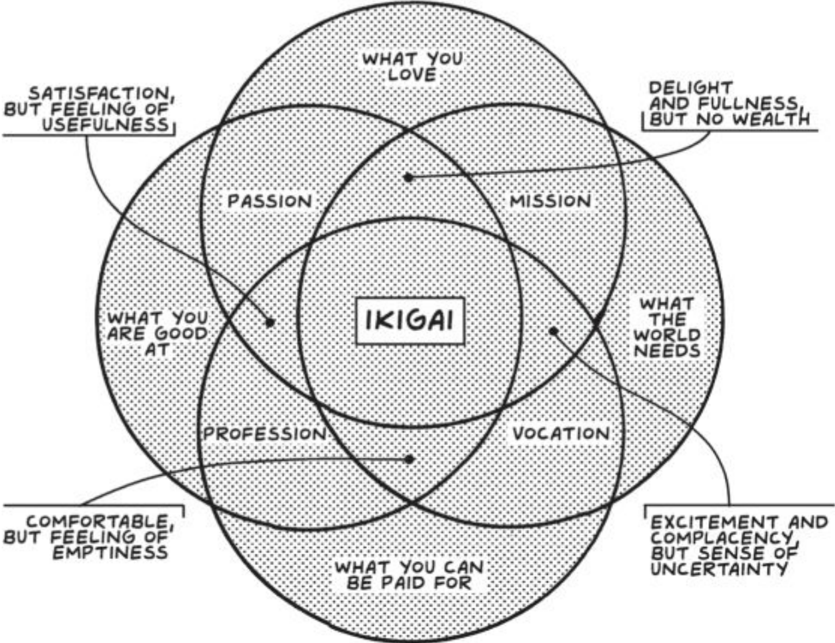
When you are in ikigai , you feel at peace, and you can work to improve the world at the same time. You can live in the present while working toward a better future.
I believe strongly that the arc of humanity is in its infancy, and one of the major ways we'll continue to make progress is via mindful business creation. One key reason I've used the word 'minimalist' to describe entrepreneurship in this book is because I believe your business does not need to be the answer to every question. Becoming a minimalist entrepreneur may result in a great outcome for you while also creating opportunities for your team and your community, but it is unlikely to solve every problem you encounter, either for yourself or for the world.
The goal here is to free yourself, to make the business require as little of you as you wish it to, so that you can engage with the world in the way you think best, whatever that looks like. For most, that means free ing others too.
You can't free everyone, or build every business, but you can at least teach a few people how.
Create More Creators, CEOs, and Minimalist Entrepreneurs
After two years in Provo, I had a new perspective on Gumroad and my mission. When I reimagined the future, I realized I had the chance not only to make a life for myself but also to expand opportunities for others to make a life for themselves.
Building Gumroad exposed me to a whole new range of creators: business owners. Not every act of creation requires a business, but many creators who reach scale start a business to manage their work. One of the things I'm proudest of is that I've made the business side of creation easier for thousands of other people and created business owners around the world.
In 2020, I stumbled upon the next step in my journey to make entrepreneurship accessible to all. Up until then, I had experimented in investing in early-stage tech startups by becoming a limited partner in Arlan Hamilton's Backstage Capital and making several small angel investments in startups such as Lambda School, Figma, and Notion. But in the wake of the George Floyd protests in 2020, I knew I could do more, and I tweeted about wanting to invest in Black founders:
Occasionally | angel invest in tech startups, including LP in @Backstage Cap.
My next investment will be in a Black founder. If you are one, please send me an email this week about what you're working on: sahil@heycom
9.00 AM Jun 1, 2020 Twitter Web App
237 Retweets 30 Quote Tweets 1,306 Likes
That tweet led to two hundred emails from Black founders and- most importantfour new investments in startups founded by Black entrepreneurs. Since then, there have been several more through in-network referrals.
But many of these startups were looking to raise more capital, and I didn't have very much. So I wrote a 'memo' and emailed other investors in my network. One responded, 'You should start a fund,' and offered to anchor it to help get it off the ground. I doubled down on my goal of creating more CEOs and minimalist entrepreneurs and launched my own fund last year.
Even though I never expected to be a venture capitalist myself, I am now able to support the kind of founders I meet primarily through my audience and through building Gumroad openly and transparently. Today I get to invest approximately $10 million a year in about fifty companies.
I still turn many founders away, but that's not necessarily because I don't believe in what they're doing. It's because most businesses would be better off without venture capital. Ever since I published 'Reflecting on My Failure to Build a Billion-Dollar Company' in February 2019, I've met hundreds of minimalist entrepreneurs who have helped me widen my mental model for what a business really is.
If you think becoming a minimalist entrepreneur was a good thing for you, you can help other people see the way. Peter Askew regularly tweets out domain names that he thinks would make great businesses so that others can follow in his footsteps. Chris Cantino and Jaime Schmidt of Schmidt's Naturals started their own investment fund, Color, which supports and invests in underrepresented founders.
Being a creator and a minimalist entrepreneur is a path that should be available to a huge array of different kinds of people, and all different kinds of employees and customers should be able to find the exact right fit for themselves. I would argue that it should be available to all eight billion people on this planet. Alas, we're not there yet.
Though minimalist businesses cannot eliminate discrimination or repair every disparity in access to education, technology, and funding, they do offer a pathway for a wide variety of entrepreneurs to take control of their own destinies. Furthermore, I believe the path to a more equitable future is for more people to create a product or service and sell that, not only because it allows business owners to make a living from creating but also because by expanding the reach of entrepreneurship we can serve people whose problems have not yet been addressed by the free market.
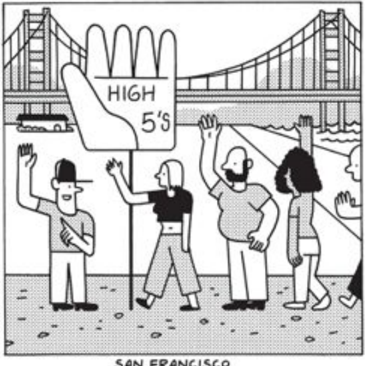
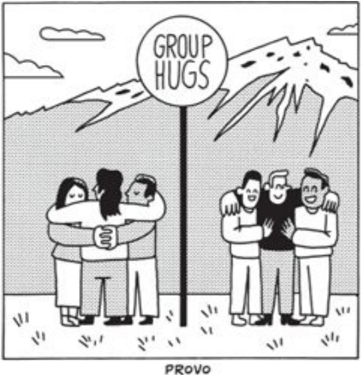
Ultimately, it's up to everyone to decide how they want to run their life and their business. Moving from San Francisco to Provo reminded me that people have their own visions of how they want to serve others. It's not one-size-fits-all, not even close, nor should it be. Different people have different problems and require different solutions.
SAN Francisco
Save the Planet
We've talked about the myth of 'changing the world' being a distraction from the forest of great business and community-serving opportunities you're already in.
But you can still pick battles to fight, especially things that are within your control, like offsetting your carbon footprint and committing to a carbon-neutral future. Large organizations, which fuel the systems and servers that many minimalist entrepreneurs use to power their businesses, are accelerating this process and making it more straightforward to commit to carbon neutrality. In 2019, Shopify committed at least $5 million annually to the Shopify Sustainability Fund, which will invest not only in carbon sequestration but also in renewable energy and more sustainable operations for both merchants and buyers. By 2030, Google has committed to running on carbon-free energy everywhere at all times.
But it's not just about relying on big business and its infrastructure to do the work. We can use our companies to make our own contributions to saving the planet no matter what size they are. Emily LaFave Olson, founder of Rainbow Road, a plant-based ice-cream company, is committed to using food as a tool to heal the planet. After she sold her first company, Foodzie, an online gourmet marketplace, and closed her second, Din, a meal kit delivery service, she too found herself asking, 'What's next?'
Her personal mission was to get closer to the earth, and she and her family moved to Hawaii as she considered her next venture. One idea kept coming to mind: ice cream.
She set out to build Rainbow Road into a company that makes delicious ice cream by way of a full-cycle, circular system that is good for the earth. ' Pono is a word in Hawaiian that means harmonious,' she says, 'and I keep the company and myself in balance by always keeping our mission in mind as I make decisions and tell our story.'
Having raised venture capital for her two previous companies, she's committed to bootstrapping for now in order to preserve full decisionmaking control and to focus on profitability and taking her time. 'I'm creating longevity by building a foundation more slowly,' she says, 'so I ask myself, 'What is the next smallest step I can take?'' That has allowed Rainbow Road to grow in a way that feels sustainable for the company and for the world. 'I can grow something really substantial with baby steps, so I'm not afraid of taking the longer path.'
Do your research, figure out what really works, and start putting your mouth where your money is.
Let Go
I haven't taken this path yet, but I've thought about it. One day I may want even more of my time back, or I may want to serve a totally different group of people in a totally different way. Just like I don't expect anyone else to work at Gumroad forever, I don't expect to either. Ultimately, I will let it go, either by choice or by force-and I certainly hope it's the former.
You will ultimately have to make the same kind of decisions. You may walk away from your business completely. You may retire on a beach and feel like your work is done. You may decide to double down, raise money, and take a big swing with your next company. You may find a new CEO but stay involved in the running of the company as chairperson of the board, or start a nonprofit to tackle the next problem you find.
But where specifically do you go from here?
The answer is that I don't know. This question never goes away, and there will never be one right answer for every founder. This is why you should always try to build the right business for yourself selfishly while at the same time also serving a community of others selflessly . And you should prioritize your happiness while you do it!
I know it's a lot to ask, but it's time to ask yourself why .
You picked a community. Why that one? You shipped a manual valuable process and then iterated it into a minimum viable product. Why did you choose to solve those problems in the ways that you did?
If memory serves, you then sold that product to a hundred customers, who happily paid for it. Who did you reach out to first, and why them?
You marketed the business and grew yourself and your team alongside it. Why, why, why?
And finally: Why do I want to move on from here? Why do I need to go anywhere at all?
What helped me, and what will help you as you tackle these questions, is to spend your newfound time reflecting on your past and observing your present to figure out who you are and what you really want. Then you can figure out how to get what you want so you can stop asking these questions at all.
Your 'purpose' may be to create more creators, or to help more people start businesses, or to retire on a beach and spend all your time surfing. I won't pretend to know.
My goal in this book was to give you the tools that would enable you to build a business that ultimately gives you the choice and freedom to decide for yourself. It's up to you now. What's next?
Whatever you do, send me a message and let me know. I'm on the internet: