market by being you
Marketing is really just about sharing your passion.
MICHAEL HYATT
Congratulations! You have community, a product, and a hundred customers. That means you've arrived at product-market fit, which I define more specifically for minimalist businesses this way: repeat customers. Repeat customers mean that your business is able to persist without ongoing sales efforts so you can start to focus on scaling. First comes scaling your customer acquisition and sales strategy, then your company, then your ambition.
So where does marketing fit in?
Marketing is sales at scale. Remember that before we built a minimum viable product, we had a manual valuable process. And before you can have marketing, you need to sell to your first hundred customers; that's because sales is the process upon which you build marketing. While sales is outbound and one-by-one, marketing is inbound and about attracting hundreds of potential customers at a time. Sales got you to one hundred customers. Marketing will get you to thousands.
But do not confuse marketing with advertising. Ads cost money, and minimalist entrepreneurs only spend money when we absolutely have to. We do cover ads later in this chapter, because they are a part of marketing, but in true minimalist fashion, we'll start with the free stuff. Because it's only once you've learned enough from sales-like you did with the manual process for your product-that you're ready to spend money on marketing.
It's much better to start by spending time instead of money. Blog posts are free. Twitter, Instagram, YouTube, and Clubhouse are free too. Instead of spending money, let's start there, by building an audience.
The Power of an Audience
You started your business by tapping into a preexisting community, and now it's time to move on to building an audience. What's the difference?
While your community is a part of your audience, your audience is not a part of your community. Instead, an audience is a network of everyone you can reach when you have something to say.
That may include your followers on each social media platform, your business's followers, your email newsletter subscribers, the people who walk by your retail store window every day, and more. If you needed to tell as many people as possible that the world was ending in an hour, how many people would you be able to tell? That's your audience.
Selling allows you to test the waters with these new people because it forces you to leave your bubble and convince them one by one, improving your product along the way. Marketing is harder, because instead of going to your customers, you have to make them leave their bubbles and come to you. People have lives and things to do, and using your product today is unlikely to make an appearance on their priority lists.
But if you can figure out how to bring customers to you, you'll have a much easier time scaling your business on all fronts. Hiring becomes easier, sales becomes easier, growth becomes easier. Everything about building a business becomes easier when you have a group of people rooting for your success that grows larger by the day.
In the last chapter, I talked about selling to your first customers, a.k.a. your friends, family, and community, and in this chapter, we'll talk about what to do when you've reached out to everyone you already know. I'm not a big fan of selling to strangers, but I am a big fan of bringing strangers into your audience and eventually turning them into customers.
People do not go from being strangers to being customers in one step. They go from being strangers to being vaguely aware of your existence to slowly over time becoming fans, and finally to being customers and then repeat customers who help you spread the word.
Start with making fans.
Make Fans, Not Headlines
Think about a company you like. Can you name the founders? Can you imagine what their office looks like? Can you hear their voices in your head? I'd bet that for many companies, the answer is yes.
Why are you able to do this? Because you've read articles about them and follow them on social media. You are much more likely to buy their products, if you haven't already.
Unfortunately, most founders are not comfortable putting themselves at the center of their company's story. But you need to. People don't care about companies, they care about other people. And you've built something from nothing. You love what you do. You don't need to share what you ate for lunch, but you should take your hard-earned learnings and share them with the world.
I've seen that no matter how successful they are, many founders still suffer from imposter syndrome. There's so much you don't know, and so many people more knowledgeable than you. There are bigger businesses than yours with more revenue, more employees, and more accolades.
That will always be true, and it doesn't matter. You have something to offer. And your existing customers care. They are paying you for your work, they're interested in how you think, and they want to know why you made certain decisions and how your product came to be. As you grow and iterate, your product will improve. You will garner more credibility and trust. And you will have learned so much that could benefit others. When you were engaging with your community and selling to your first one hundred customers, you were already doing this. You were personally connecting, with people, telling them your story, and listening to theirs.
Building an audience, the first step toward making fans, is having these conversations at scale.
The Minimalist Marketing Funnel
The journey of each customer will be different, but it always starts with someone having no idea who you are or what you're selling. Eventually, they will encounter your product some-where in their Instagram feed or in a forum post or in a tweet a friend shares. They will almost definitely forget about it. One day, even though they'll forget who posted it, they may 'like' it. They may engage a few times.
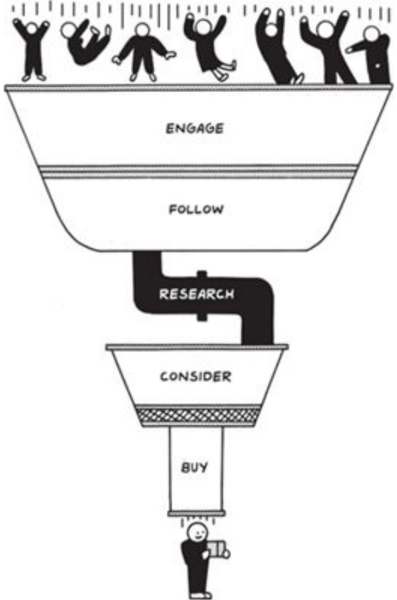
Eventually, they will get interested-not in your product, but in what you or your business has to say. They'll hit that big 'follow' button. Maybe they'll click through to your website and check it out. If they like what you think, what you say, and how you say it, they may like what you've built too.
Most people will not be a fit for your business. That's okay. Your audience will grow much larger than your customer base-but your customer base is a subset, likely the most passionate, of your audience.
If they are a fit, they'll start to consider your product. Then signal their intent by signing up for an account, let's say, and then evaluating your functionality, pricing, and more. One day they'll purchase.
While you may be tempted to cut as many steps out of this funnel as possible, you may also want to add steps to it, like a free trial. But you can't shorten this process, no matter how much you'd like to. Every customer will engage, follow, research, consider, and finally buy (and hopefully buy again!).
Top of the Funnel: Social Media and SEO
There are eight billion strangers out there to have conversations with. Where do you begin? Start with the communities that your existing customers belong to, other than yours, and move outward from there. Marketing is second-degree sales, so your existing customers should already be spreading the word about your product. Ideally they're doing it because it makes their experience better. Your customers may go on first dates at your ice cream store, for example.
You can also incentivize this behavior. If you're an ice cream store, you may offer a free waffle cone to anyone who posts a story to their Instagram.
The analog world has the concept of 'foot traffic.' Real estate agents will tell you again and again, 'Location, location, location.' Location matters, because people are going about their day in the physical world, and if you happen to be where they are, literally, you may make a new sale you wouldn't have made otherwise.
Social media is not so different. Instead of Main Street, there's the Instagram 'Explore' tab. Instead of Martin Luther King Boulevard, it's the Twitter algorithm throwing new things you may appreciate (or be outraged by) into your feed.
These algorithms work by judging the theoretical 'quality' of your content. The secret sauce is unique to each platform, but it is typically judged by what is going to lead to continued engagement by the end user. In general, this means that your content should lead to likes, shares, comments, and other forms of positive affirmation on the part of the consumer on the other side of the screen.
Location does still matter for digital products, just not in the same way that it does for the ice cream store. Just like you may choose a different mall for your storefront based on your kind of customer, your audience will live in different places online.
Twitter, to use one example, was a great place to start for Gumroad, because of the 'retweet' functionality. It allowed our creators to share our tweets with their audiences. I've seen folks go from a few hundred followers to thousands because a single popular account retweeted their idea. And because it's often much easier to tweet than to produce the images, video, or audio necessary to post on other social networks, you can train yourself via a very quick feedback loop.
But it depends. Instagram may be the perfect platform for your business. Or YouTube, or Reddit, or Pinterest. Try them all. The good news is it's much cheaper and easier to try a new platform than to move your store to a new zip code. The world is in flux, and new platforms are constantly spinning up. You may find more success on TikTok, Clubhouse, Dispo, or something new that doesn't yet exist. The important thing is to start. Eventually you'll find the platform that will let you advertise your business by being you.
How to Get Started on Social Media
- Create an account. One is your personal account (you, the human) and one is your business account (you, the business).
My accounts are my own (@shl) and Gumroad's (@gumroad). My personal account's goal is to encourage more people to start businesses. If you're reading this book, that's probably not surprising to you. Gumroad's goal is to inspire people to become creators, on Gumroad or otherwise. There's a subtle difference-creators and business owners are separate identities, but the fundamental questions are the same: Who is your audience, what do they want out of their life, and how can you help them achieve their goals?
Too many people think their business account is enough. No, it's not. People don't care about your business and its success, they care about you and your struggles.
- Don't share what you ate for lunch. Status updates about your life and your business are fine, but they won't grow your audience. The days of discussing meals on social media are over, even on your personal account. Your goal now is to expand your reach and to provide the most value to strangers who find you on the internet.
- Be authentic. Social media is about ideas, not people. Be yourself, but focus on acting out a set of core values. What did you learn? What conversation did you have? Your job here is to give , not ask . Remember: This is not about selling .
Your business account should be similar to your personal one, because they're both you , and both should be about ideas so that you're constantly giving value out for free. It may feel weird that you're not talking about a new customer case study or a new feature you've launched. You can do that too, occasionally. But the truth is, your audience doesn't care. They want to lose weight, laugh, be entertained, get smarter, spend time with loved ones, go home on time, sleep adequately, eat good food, be happy. Help them do that.
- Build in public. In chapter 2, I talked about community and sharing what you were learning in the process of becoming part of a likeminded group of people who share the same interests. Now it's time to take that a bit further on behalf of your business. Not only should you share what you learn to maintain your ties to your community, but you should also be building your business in public and sharing that process with your customers.
You don't have to be a genius or pretend to be a genius, you just need to be a step ahead of your audience in at least one thing.
- Trust the feedback loop. Start sharing, and you will soon find out what works and what doesn't. The brilliance of social media is the instant response (or lack of response) you get from your followers. As your audience grows, you will collect more data so that every day you can look back at what worked, what didn't work, and examine why. 'Working' means something different for every business, but eventually your efforts should be quantifiable, objective, and should contribute in some way to your bottom line.
Just like your product, the stuff you share on social media is only as good as the experiences it enables people to have. This goes for Facebook, Instagram, YouTube, Reddit, Pinterest, and every other platform that connects like-minded people to each other. There are subtle differences, but you'll figure them out quickly as you go.
Soon, you'll be able to predict how something will land before you even say it. But since I've already gone through that, I'm here to help you out. I've learned that there are three levels to the type of content people share, each one with more potential reach than the last.
Educate, Inspire, and Entertain
It may be tempting to skip straight to the most 'effective' type of content, but just like working out, you should walk before you run a 5K, and run a 5K before you run a marathon. Your body needs time to adapt, as does your mind. And most important, your audience does too.
Make your mistakes when few people are watching. The corollary of succeeding in public is failing in public, so you want the confidence and security of success at smaller scales before you move up the ladder.
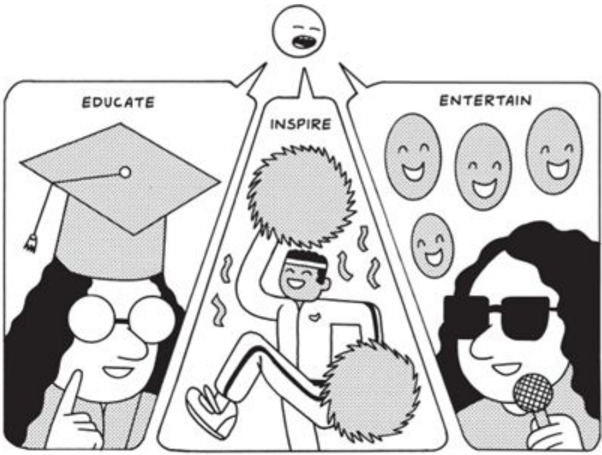
Few make the transition from being themselves to being teachers, but those who do build audiences quickly, because people spend much of their time on social media in search of a better way to live, learn, and make money. This is how you start growing your audience beyond the people who already know you. You do it by providing value for free, asking for nothing in return, repeatedly. It's a natural continuation of what you were doing in your community, only now you're doing it with a wider group of people. If you have a hundred customers, there are at least a hundred things you have learned. Start by sharing those.
Your existing audience will engage with these ideas, broad-casting the very best ones to their own audiences, and yours will grow as a result. You will do this every day , because it's part of your job and because you're already online all day anyway.
Of course, this is not all you're doing. You're still building a company. Building a social media presence is a lagging indicator of the success of your company, and it should always be secondary to it.
In 2008, Jenny and Ron Doan lost most of their savings in the financial crisis. Their kids, Al and Sarah, came up with a plan to help get their parents back on their feet. They bought a computerized quilting machine to set up their mom, an avid quilter, in a small space in their hometown of Hamilton, Missouri. Al and Sarah hoped that given the demand and the long lead time for machine quilting, Jenny could take in other people's projects and finish them. If she could earn $10,000 per month, they figured, she could not only make a living, but could also rebuild the family's savings.
Business was so bad that their idea seemed dead on arrival. Al, who had already built several internet businesses, started looking around for a way to let people know about his mom even though he had no idea where quilters hung out on the web. What he discovered was that the internet had not yet touched quilting, and that most quilters closely guarded their techniques and designs in a way that kept people, especially beginners, out rather than inviting them in to learn, sew, and create.
Al persuaded Jenny to make ten YouTube tutorials in which she taught quilting techniques, and, well, the rest is history. Jenny's more than five hundred videos have been viewed millions of times, and in 2020, Missouri Star Quilt Company shipped more than one million orders. Hamilton has become 'the Disneyland of Quilting,' and the once-decaying small town hosts more than a hundred thousand people every year who come to visit Missouri Star's sixteen quilt shops, their restaurants, and their retreat center. All of that grew from ten YouTube videos.
If you're thinking, 'I don't know where to start,' or 'Five hundred videos!?!,' remind yourself that you've been practicing these skills for a while now. Remember how you participated in your community by commenting, contributing, and creating? You're basically doing that here at scale. It doesn't have to be polished, it doesn't have to be produced, it doesn't have to be perfect. The most important thing is to set aside a dedicated amount of time every day and to begin.
LEVEL TWO: INSPIRE
Education is a great way to get started, but to grow outside of your 'students,' you need to go beyond teaching. There are only so many people who are interested in learning physics, but Richard Feynman is much better known than any physics teacher would otherwise be because he talked about something grander than that. He took his insights from physics and turned them into insights about life. Technically his work falls into the category of philosophy.
At some point, he started motivating people, inspiring them to lead better lives. As physics became a subset of what he was teaching, his physics students became a subset of his new audience; far more people want to live better lives than want to learn physics.
How can you motivate and inspire? You can apply your learnings from painting, writing, designing, software engineering, or physics to life and share them with a wider audience. You can document your projects and your progress: where you started and where you are today. If you're in the supplements business, for example, a weight loss journey will gain far more traction than an information video.
Gimlet Media, a narrative podcasting company acquired by Spotify in 2019, launched its first podcast, StartUp , about its own humble beginnings. In the first season, founders Alex Blumberg and Matt Lieber tell the story of building their business, including one infamous episode in which Alex awkwardly and disastrously pitches venture investor Chris Sacca, who then shows him what his pitch should have been. Founder fights? Check. Burnout? Check. Family drama? Check. StartUp reveals some of the moments every founder faces but few like to discuss. The result? Millions of downloads.
Did the founders set out to inspire? Not necessarily. But by sharing their struggles and their successes, they showed others what was possible and made fans, not just customers. You can do the same. Don't just teach. Speak from experience, tell the truth, and the inspiration will happen.
LEVEL THREE: ENTERTAIN
This third level is the most important, because it makes you relevant to a vastly larger group of potential customers- almost everyone. But it is also the hardest to achieve.
Teaching is hard, inspiring is hard, entertaining is hard. Now try doing them all at the same time. Why? Think about how you spend your time. Do you spend it watching movies and TV shows and stand-up comedy specials, or-let's be honest-reading books like this one?
And even if you do read books like this, how often do you talk to your friends and family about them? It's more likely that you spend time discussing the last basketball game you watched, or the last political scandal, or the upcoming Hollywood blockbuster.
When push comes to shove, entertainment wins.
Social media is no different. Every platform has a feed that puts all of the content head-to-head. There's one feed, for everything. If content is king, entertainment is the king of content.
You don't have to do something completely different. Keep educating people, and inspiring people, but have more fun doing it. You are still trying to teach people, but you want to do so in a way that sticks with them-and that happens when you make it entertaining.
Think about the three parts of a joke: (1) Say something, (2) establish a pattern, and (3) break the pattern with a punch line.
Here's one example that worked well for me. I often talk about entrepreneurship (big surprise!), but this tweet resonated and went viral . . . because it's funny:

You will fail at this, as I certainly have. Telling jokes is hard. And because it's the most subjective of the three, it will be harder to figure out why some things work while others don't. But that's exactly what building a brand is-the murky, 'soft' stuff that isn't directly about the value you are creating for your customer.
Think about your favorite brands and how they communicate. Nike isn't selling shoes, and Apple isn't selling computers. They go straight for the heart, or the funny bone, and you should too.
But never forget: While social media is sexy and often leads to having millions of followers, it is not the end-all and be-all of your business. I've seen creators with tens of millions of followers fumble, and creators with just a few dozen earn a living multiple times over.
That's because social media is the top of the funnel. It's mostly strangers. Most of them are not fans yet, and almost none of them are customers.
You still need to convert them, and to do that, you need to get them to commit.
Middle of the Funnel: Emails and Communities
Don't call it a comeback. Email's been here since the very beginning of the internet. And it'll probably be here until its end.
Twitter, YouTube, Instagram, and Facebook can take away your business at any time, by tweaking the algorithms, shutting down your account, or making you pay to show up in people's feeds. So even though social media can be incredibly effective for gaining distribution, you are building on rented land.
That's why, as soon as you have social media followers, you should start building an email list.
Email is 'peer-to-peer.' It gives you a direct line to your customers that isn't controlled by a private company, an algorithm, or whether you spend money on advertising. And if you have someone's email address, it means they consider you a friend, not a stranger.
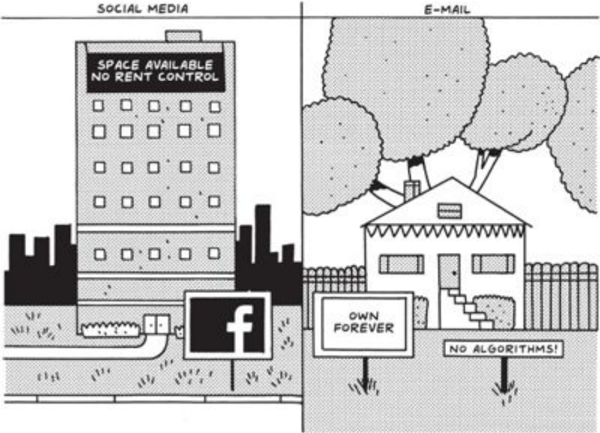
Of course, you don't spam your friends, so you shouldn't spam these people either. Apply the same three-level framework to emails as you do to any other type of content. First, educate. Second, inspire. Third, entertain. Ideally, you'll do all three.
Just like you built a process before you built a product, the earliest version of your email list may just be a spreadsheet that you update daily or weekly with the email addresses of your friends and family, your earliest customers, and the people in your community who have shown interest in your product. Eventually, you will want to automate parts of this process as your list grows and you have better uses for your time, like growing the list itself through sales, social media, and content.
To do that, you can use an email marketing service like Mailchimp or ConvertKit to collect emails from your most devout fans. To sweeten the deal, give them something in exchange for their email, like a mini ebook, a short PDF guide, a video, a series of emails that help them solve a problem, or a checklist to complete.
While you probably won't have millions of email subscribers, each subscriber is worth far more than a follower. Besides the product itself, Gumroad's email list is probably our most valuable business asset. More than 200,000 creators subscribe to the Gumroad newsletter. When we have something important to say-such as a new feature that will make our creators more money-we can tell all of them about it, without anyone else's permission.
(While we're here, subscribe to it: gumroad.com/gumroad/follow.)
Over the years, they've heard from us dozens of times, and they will continue to, until unsubscribe do us part.
You can encourage people to subscribe to your list in other ways too. In the previous section, we went in-depth on how to use social media. The next time you have a viral tweet, you can reply to it with a link to sign up to your newsletter. When you have something longer to say, write a blog post and link to that. At the bottom, let people know they can subscribe for further content. Go read your favorite blogger, and I bet you'll notice a form at the very end, with a free goodie on offer, often called a 'lead magnet.'
Finally, when you make a sale, virtually every service will allow you to ask for and collect your customer's email addresses, along with any other information you may want to ask for (such as their first name, or the city they live in).
Too many creators-trained by Amazon, perhaps, which doesn't give you any data on your customer-think of a sale as the end of a transaction, instead of the beginning of a relationship. The way we're marketing lets you build an audience of people who are hearing from you over and over again, before and after they've bought your product.
To get good at this, and for it to be most effective, you need to reach out to the people on your list frequently. Create a schedule, whether it's every Monday morning or every Saturday night or even just once a month. Pick something right now-you can always change your mind later.
The more consistent you are, the faster you'll find out what works for you. Not just the kind of content, but the platforms themselves. Your customers spend their time in different places, and you need to go find them.
You don't have to blog four times a week if a monthly newsletter with meaningful content is what you can manage and is more suited to your business. As with social media, experiment with how best to use your email list. If you send something out and readers unsubscribe en masse, don't do that again. But if you offer your knowledge, your insights, your experience, and a discount, and you see a response, do that over and over.

Eventually, your business will start to grow organically. You will no longer have to push that boulder up a hill. Social media algorithms will start to boost your content to new followers as you find your own success, your readers will share your blog posts with their friends, and your customers will start to tell others. How can you help them do so? By creating more content they want to share-that will help them educate, motivate, and entertain their own audiences.
How Laura Roeder Used Marketing to Grow
While I prioritize social media, other minimalist entrepreneurs like Laura Roeder, founder of Paperbell and MeetEdgar, have a different take. For Paperbell, a scheduling and client management software for personal coaches she founded in 2020, she decided on SEO-driven content marketing to engage her audience. Early on, she hired an SEO consultant to compile a spreadsheet of keywords that reflected the search intent of her target customers. At first she was worried that using SEO would compromise the quality of Paperbell's resources and advice for coaches, but instead it's helped focus her writing and has resulted in organic growth. 'The amazing thing about SEO is that it's a long-term play,' she says. 'It only gets better over time if you put effort into it.'
Though she does eventually hope to actively build up followers on Facebook and Instagram, right now she puts most of her energy into regular blog posts and product update emails, which she describes as her favorite marketing copy. All of the changes Paperbell makes to its software at this stage are in response to requests, so the update emails are a chance to delight customers who are invested in Paperbell's progress. 'Founders put so much time into researching marketing strategies,' she says, 'but the only way to discover what will work is to try it, see if you like it, and watch to see if your customers respond.' As the founder of multiple companies, she finds it freeing that there's no one right path for everyone and every business.
She knows because she's made changes between Meet-Edgar and Paperbell. With MeetEdgar, a social media scheduling tool she founded in 2014, she and her team didn't offer trial subscriptions because the software required a time commitment to learn and to set up. But since then, there's been a behavioral shift in the way people research tools and consider software.
'Free trials are table stakes,' she says. New customers aren't interested in marketing information; they open six tabs and want to get started comparing their choices right away. With MeetEdgar, she first tried invitations, but now both MeetEdgar and Paperbell offer trial subscriptions.
Laura is a big believer in building an email list from day one. Paperbell's list comes from her first customers as well as from those who've signed up for free trials. She also has a regularly changing lead magnet on the website to collect email addresses. The list is key because Paperbell is a low-cost software option for individuals rather than for teams, which means the math doesn't work to do demos or to have a dedicated sales team to reach customers.
'A lot of entrepreneurs think they have to start something totally new,' she says, 'but a proven market makes your job so much easier.' With the way people buy on the internet, the quality and consistency of your marketing means that you can get on people's radar and you don't always need to create a unique product category to be successful against bigger companies. Instead, you can build great software and a great community into an impactful, sustainable business through patient, strategic, and consistent marketing.
Spend Money Last
Press cycles about million-dollar fund-raises and billion-dollar valuations are short-lived and targeted at aspiring entrepreneurs, not people like your customers. Building your audience that way doesn't work, because a months-old startup has nothing to say, besides that a few rich people gave them some money. Trust me, I know.
Most growth you see is paid for. So if you are jealous of someone's constant press and stratospheric growth, keep in mind that they are likely burning cash in order to acquire customers and to promise them an experience or a product that could come to an abrupt end at any moment when the money runs out. It is quite literally growth at all costs.

This is backwards. You started your business to help a group of people you care about, and your product is what you offer them, not your ad creatives. But it is too easy to fall for that trap when these are the examples that get the spotlight. Your product is not for everyone, so you shouldn't try to reach everyone. That's way too expensive. And if you're spending money to get followers, to get customers, or to get eyeballs on your product, you're buying an ad no matter what it's called.
There are display ads, social media ads, ads in newspapers and magazines, outdoor advertising ads, ads on the radio and on podcasts, direct mail, video ads, product placement, event marketing, influencer marketing, email marketing, and more.
This is an expensive set of rabbit holes to go down, which is why it's important to wait as long as you can before doing so. Ideally, you should have a clear idea of what's already working. Then, and only then, should you spend money to accelerate.
The stories about your business will be stories about your struggles, your customers, your learnings, and your journey. They will create more fans. Who will in turn become your customers, who in turn will tell others about your business.
There's another reason to figure out how to grow using your time and the customer base you currently have. Relying on advertising, even if it works for you today, may eventually get too expensive. The COVID-19 pandemic accelerated the move from traditional to digital advertising across all industries, which in the long run will drive the cost of ads up year over year. Just as you don't want to rely on social media companies to mediate your relationships to your customers, you don't want your business model to depend on outside companies providing you with affordable advertising. The sooner your marketing function is as sustainable as the rest of your business, the better. And there's no better time to start than from the very beginning.
Spend Money on Your Customers
Startups like PayPal and Uber spent millions of dollars in their early days paying their users to help them grow. But this may pose an obstacle to real growth. If people are only sharing your product because they are being financially rewarded for it, it is unsustainable.
Instead of thinking about loyalty programs as a marketing function, think of them as genuine rewards to loyal customers. For example, you can offer discounts for leaving a business review online or for sharing it on social media.
Eventually, you can worry about getting headlines from journalists, but for now you should focus on getting reviews from your actual customers. Once your business is growing and sustainable, you can go beyond outreach to the community reporters and micro-influencers that I mentioned in chapter 4. Now you're ready to offer your product for free to reviewers and more established influencers, or you can offer samples of your products or exclusive information on your company to bloggers and journalists who cover your space. But most of all, you can just tell your story. You can be yourself. You worked hard for this. You struggled. You can show others that their hard work and struggles will be rewarded too.
Helena Hambrecht, cofounder and co-CEO of Haus, an aperitif brand, sees enormous potential in enlisting your best customers as marketers. This is one of the strategies she and her husband, Woody, a third-generation winemaker, are using to market their natural, lower-alcohol-by-volume spirits that they sell direct to consumer.
She and Woody didn't have money to put into paid marketing and customer acquisition, so from the first product launch at Haus, she reached out to her communities and pitched stories to the press and to individual influencers whom she knew would be excited by the company story and the content she posts on social media, including some of her own photography.
Given budgetary constraints, it would have been impossible for Haus to generate all the content they need for social media, and that's why Helena believes in 'putting the power in customers' hands.' Haus relies on usergenerated content to generate word of mouth. Lo-fi content shot on an iPhone and genuine customer voices convey the authenticity that is a hallmark of the brand and that speaks to potential new customers.
The key, she says, is to build relationships, to make contributors feel valued, and to give them the tools they need to make content that they can not only use for Haus but that they themselves will be proud of. 'Marketing doesn't have to be fancy to be impactful,' she says. 'It has to be real.' Though Haus does spend money on ads, she notes that advertising performs best when it's surrounded by a lot of organic content.
She and I and many others believe that this is the only way paid marketing makes sense. Ads are anything openly sponsored and nonpersonal that are used to sell an idea, a political candidate, a business, or a product. The bad news is that we still live in a world in which huge corporations spend thousands or millions of dollars to reach thousands or millions of people, and entrepreneurs are up against the sophisticated marketing departments and advertising agencies of Disney, Coca-Cola, Nike, and the like.
Though technology hasn't completely leveled the playing field, it's made advertising a much fairer fight. There are more places to buy ads, with smaller audiences. And the more targeted you can get, the less you have to spend. This is good news for small businesses that don't have the large ad budgets of Fortune 500 companies and VC-funded startups but do have committed, well-defined communities.
You can advertise on Yelp, or Instagram, picking a specific geographic location or only people interested in, say, the oil paintings of John Singer
Sargent. If you're selling a painting course about how to paint the human figure like an impressionist at the turn of the twentieth century, this can be incredibly effective.
A lot of people interested in those things will still not be interested in buying your product or service. A lot of people who like ice cream won't buy your ice cream. They may be dairy-free, or only eat ice cream on date nights, or they may like looking at ice cream more than they wish to actually eat it. Or perhaps they used to eat ice cream every day and now they're repenting for it. Who knows? You certainly don't.
But somebody (spoiler: Facebook) does. You don't need a whole marketing department, you just need a Facebook account. With their help, you can compete with the world's largest brands in just a few hours a week.
Take Advantage of Lookalike Audiences
I've already talked about the idea that the scale at which you can be successful with advertising is shrinking every day, thanks to software and the internet. As you browse, services like Facebook and Google collect data on your habits. They know what you need, want, and like. They may even be able to predict what you'll need, want, and like tomorrow . For better or worse, this is no longer surprising.
Collecting and using customer data is a strategy that's here to stay, but it inevitably leads to questions about internet privacy. From the outset, I've said that minimalist entrepreneurs should be selling to their users, not selling their users. In practice, that means building a product that solves a real problem for your customers, only selling to customers who are already convinced by your product, and only using your email list to send important information (not spam) to people who have opted in.
The same logic applies to ads. If you choose to spend money on advertising, you should do it in a way your customers would be happy about. As a bonus, you'll be able to spend less money to reach each new customer.
At Gumroad we don't spend any money on paid customer acquisition, for three reasons: (1) We can reach out to creators directly; (2) their use of Gumroad makes their own communities aware of Gumroad for us; and (3) I'm happy with our current growth rate. But paid ads can be a valuable tool for other entrepreneurs, such as ones selling high-quality consumer goods. That said, you should be mindful of the very real data privacy concerns users will have when they are on the receiving end of targeted ads. Ultimately, you have to decide if paid customer acquisition is the right fit for you and your business.
If you do decide to spend money, you will be glad that you waited. That's because you'll have a much better idea of who your customer actually is, and therefore who else may fit their profile.
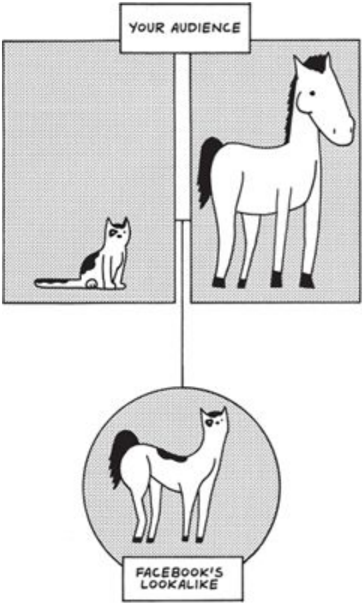
For example, you can ask-and pay-Facebook if they happen to know folks who closely resemble your customers. These are called 'lookalike audiences,' which Facebook describes as 'a way to reach new people who are likely to be interested in your business because they're similar to your best existing customers.'
Instead of buying ads to target large swathes of the population, wasting their attention and your money, you can instead tell Facebook, 'Please tell people who most resemble my existing customers that I exist.'
Each company has its own name for this kind of ad. For example, Pinterest calls them 'actalike.' If you decide to spend money on this at all, it's a good way to get started. But remember that this kind of targeted advertising is also becoming more expensive over time, possibly rendering a previously sustainable business unsustainable.
I could go on and on. There are a million different ways to advertise. But you should rarely, if ever, need to. A business built primarily through organic growth will be durable from the start, but even more durable over time as the businesses that heavily rely on paid advertising start to struggle.
Instead of spending money, spend your time. Build relationships, have passionate customers who spread the word, and then think about spending a little bit of your profits to slightly expand your horizon. If you can do that, you will stay lean and grow at a comfortable rate that never overextends your business.
But paid marketing should never get in the way of what really matters: talking to and selling to customers.
Bottom of the Funnel: Sales
Ultimately, this is what marketing is all about: selling to customers, at scale. Good news: You already have a ton of experience doing that.
That's why this part of the funnel is short and sweet. You've already done the hard work of building a product, finding initial customers, and making sure you've solved their problem. Now you get to revel in the fruits of your labor as your marketing starts to do the much more scalable work of attracting your next customers to you.
KEY TAKEAWAYS
- Marketing is not about making headlines, but making fans.
- Start by educating, then inspiring, then entertaining. Each of these three levels of content is more far-reaching than the last.
- Paid advertising can work, but it has its cons. If you do decide to spend money, wait as long as you can-you'll know much more about who you're trying to reach that way.
Learn More
- Read Guerilla Marketing , a book by Jay Conrad Levinson.
- Read Made to Stick , a book by Chip Heath and Dan Heath.
- Watch a video course by Daniel Vassallo.
- Look at room.club/tips, a guide I wrote on how to build an audience on Clubhouse.